35 Motivational Stories for Students in English, With Lessons and Discussion Questions


Many students remember stories longer than they remember advice. A short story can show what discipline, honesty, courage, and patience look like in ordinary life. That is why motivational stories in English for students continue to be useful in classrooms, study circles, and family conversations.
This version is intentionally built to be more original and trustworthy. The stories below are **original short motivational stories**, not exaggerated “real stories” with unsupported claims. That matters for both reader trust and site quality. Each story ends with a lesson and one discussion question so the page feels useful, not just emotional.
How to use these stories
You can use these stories in four ways:
1. as short reading practice for students
2. as discussion prompts in class
3. as assembly or speech material
4. as self-reflection before or after exams
If you want to build more value on the site, you can later add classroom worksheets or printable PDFs based on these stories.
1. The Empty Page
Aarav sat with a blank notebook for twenty minutes, waiting for the perfect first sentence of his essay. Finally, he wrote the title, then one rough line, then another. By the time the school bell rang, the page was no longer empty and his fear was no longer in charge.
2. The Last-Bench Notebook
Meera always sat on the last bench because she thought smart students belonged in front. One day her teacher walked to the back, looked at her neat notes, and said, “The bench does not decide the mind.” Meera kept the same seat, but she raised her hand more often—and her confidence changed before her marks did.
3. The Broken Pencil
Rahul’s pencil snapped during a class test. He nearly gave up, convinced small bad luck always ruined his day. Then the girl beside him silently lent him another pencil. Rahul finished the paper and later realized the real problem had not been the broken pencil; it had been how quickly he wanted to surrender.
4. The Library Card
Nisha had no private tuition and no expensive guidebooks, but she had a library card. Every evening she borrowed one useful book and returned it with handwritten notes. At the end of the year, her classmates were surprised by her result. Nisha was not lucky; she had simply used what she had, every single day.
5. Five More Minutes
Whenever Kabir felt like quitting homework, his father gave him the same advice: “Give it five more honest minutes.” Many times, five minutes became fifteen. On the days it did not, Kabir still ended with more work done than if he had walked away immediately.
6. The Missed Bus
On exam day, Sana missed her school bus and burst into tears. Her mother helped her reach school another way, but the real change came later. Sana started waking up twenty minutes earlier after that. Missing one bus taught her a lesson that no timetable lecture ever had.
7. The Quiet Question
Dev understood most of the chapter except one line, but he stayed silent because he did not want classmates to think he was weak. After class he finally asked the teacher, who smiled and said three other students had the same doubt. Dev learned that asking questions does not expose weakness; it often reveals attention.
8. The Practice Bell
Ritu wanted to become good at public speaking, but every speech day made her hands shake. So she practiced for two minutes each evening when the temple bell rang near her home. The sound became her signal to stand up and speak aloud. Months later, when she won a school speaking prize, she thanked the bell that reminded her to practice when no audience existed.
9. The Red Mark
Arjun hated seeing red marks on his answer sheets, so he stuffed them into his bag and forgot them. One weekend his sister made him sit down and list every red mark by topic. The pattern was obvious: he kept losing marks in the same type of question. Once he faced the pattern, his scores began to change.
10. The Borrowed Clock
For a week, Isha borrowed her cousin’s old alarm clock because her phone distracted her at night. The clock had one job: wake her up. Without notifications, she slept better and revised better in the morning. Returning the clock felt harder than expected because it had quietly repaired her routine.
11. The Half-Finished Chart
During a science project, Tanmay kept redesigning the chart paper because he wanted it to look perfect. His partner completed a simpler version and moved on to the explanation. On presentation day, the teacher praised the group for clear understanding, not for artistic borders. Tanmay never forgot that unfinished perfection loses to finished clarity.
12. The Water-Bottle Rule
A class teacher noticed students constantly leaving their seats during study period. She introduced one quiet rule: fill your water bottle before the session starts. The class laughed at first, but interruptions dropped quickly. The students discovered that discipline is often just preparation done a few minutes earlier.
13. The Slow Reader
Vikram read more slowly than most students and often felt ashamed during silent reading tasks. Instead of racing, he started summarizing each paragraph in one line. By exam season, he remembered more than the classmates who finished faster. His speed was average; his understanding had become exceptional.
14. The Mock Test
Pooja scored poorly in her first mock test and wanted to stop taking them altogether. Her teacher told her, “Mock tests are where mistakes are cheap.” Pooja kept practicing, and by the final exam, the pressure felt familiar rather than shocking. She did not become fearless; she became prepared.
15. The Unsent Essay
Neel wrote a scholarship essay and then left it in drafts for four days because he thought it was not good enough. On the last evening before the deadline, his mother asked, “Will an unsent essay ever be selected?” He sent it. He did not win the scholarship, but he did receive feedback that helped him write a much stronger application later.
16. The Seat Near the Window
Anaya loved sitting near the classroom window, but the outside view stole her focus. Before exams, she chose a different seat for a month. Nothing dramatic happened—except that her revision improved. She learned that self-control sometimes looks less like resistance and more like wise distance.
17. The Extra Problem
Every day after finishing homework, Farhan solved one extra math problem that was slightly harder than required. At first he got many wrong, but over time normal classwork began to feel easier. His confidence did not come from compliments; it came from touching difficulty regularly.
18. The Lost Medal
When Shreya lost a medal she had won in middle school, she cried as if she had lost proof of her talent. Her grandfather told her, “If the medal made you good, losing it would make you weak.” Shreya smiled through her tears. She understood that results matter, but the ability behind them matters more.
19. The Folded Timetable
Rohan made three colorful study timetables in one month and followed none of them. Then he wrote a plain, folded timetable on one small sheet: subject, time, task. Because it was simple, he actually used it. For the first time, planning helped him work instead of helping him avoid work.
20. The Phone in the Drawer
Before starting revision, Kavya placed her phone in a drawer across the room. The first day she checked it seven times anyway. The fifth day she checked it twice. The habit did not disappear at once, but the distance gave her attention room to recover.
21. The Group Project
A group of four students kept failing to finish project work because each person assumed someone else would do the hardest part. Finally, one student divided the work clearly and asked everyone to report progress by evening. The project improved as soon as responsibility became visible.
22. The Substitute Teacher
One day the regular teacher was absent, and the class expected a free period. The substitute teacher entered, wrote one question on the board, and said, “Use the period well, and tomorrow will feel lighter.” Most students worked quietly. The next day, they were surprised by how much calmer they felt because of one wise hour.
23. The Science Fair Wire
During a science fair, the wire connection in Aman’s model came loose minutes before judging. Instead of panicking, he explained the concept clearly while fixing it. The judges appreciated both his understanding and his composure. He learned that calm thinking can save a project faster than frantic emotion.
24. The Shoes at the Door
Before evening study, Pari started leaving her shoes, bag, and water bottle in the same place every day. It looked like a tiny ritual, but it helped her begin faster and with less mental clutter. She had unknowingly built a doorway habit: once the shoes came off, study time had started.
25. The Dictionary Page
Imran struggled with English vocabulary, so he tore one unused notebook into tiny slips and wrote one new word on each. He revised them while walking, waiting, and traveling. Months later, his essays sounded more confident because he had improved in minutes most students ignored.
26. The Morning Alarm
For weeks, Saloni snoozed her alarm and then rushed into the day feeling guilty. One morning she moved the alarm across the room so she had to stand up to switch it off. The change was small, almost silly, but it broke the pattern that had been controlling her mornings.
27. The Empty Recharge
On the night before a test, Aditya’s phone battery died and he lost access to the videos he planned to watch. Frustrated, he opened his textbook instead. To his surprise, the chapter felt clearer because he was reading, underlining, and solving rather than passively watching. The dead battery accidentally gave him better study.
28. The Two Pens
Rina always carried two pens into exams. Her friends joked that she was overly cautious. But carrying a spare pen did more than solve a practical problem—it made her feel prepared. Often, confidence grows from simple readiness rather than from motivational speeches.
29. The Rainy-Day Exam
Heavy rain flooded the road on the morning of Aarohi’s exam, and many students arrived tense and annoyed. Aarohi could not change the weather, so she reviewed three key points in her mind while waiting. By choosing usefulness over complaint, she protected the only thing she could still control: her focus.
30. The Rewritten Paragraph
During writing practice, a teacher asked students to rewrite just one weak paragraph instead of rewriting the entire essay. Most students improved quickly because the task felt manageable. Kunal realized that progress often happens when a huge problem is reduced to one fixable part.
31. The Backspace Habit
Whenever Alok typed an answer, he kept pressing backspace to make each line sound perfect. His sister suggested writing the full draft without editing for ten minutes. The quality improved because the ideas finally had room to exist before being judged.
32. The Attendance Sheet
At the end of the month, a teacher showed the class how often each student had missed the first ten minutes of school. Many who thought they were regular were surprised by the pattern. Small delays had quietly become a habit. Awareness became the beginning of correction.
33. The Lab Partner
Madhav was good at theory but weak in practical work. His lab partner, who was strong with equipment, agreed to exchange help: one explained concepts, the other explained execution. Both improved because neither treated learning like a competition. They treated it like shared growth.
34. The Promise to Self
After a disappointing result, Jiya wrote one promise on paper: “For the next thirty days, I will study before I judge myself.” She taped it above her desk. The sentence did not change her marks overnight, but it changed the order of her actions. Work came before worry.
35. The Small Lamp
During a power cut, Harsh studied under a small rechargeable lamp while the rest of the house waited for electricity to return. He could not study for long, but he finished one topic. That night stayed in his mind because it proved something important: even limited conditions can still hold useful effort.
Conclusion
Motivational stories in English for students work best when they are simple, believable, and easy to discuss. A good story does not need dramatic promises. It needs a clear human moment, a useful lesson, and a question that helps the reader think.
FAQ
Are these motivational stories real?
These are original short motivational stories written for students. That makes the page more original and avoids presenting unsupported claims as fact.
How can teachers use these stories?
Teachers can use one story as a morning reading passage, discussion starter, writing prompt, or value-education activity.
Are short stories better than long motivational articles?
Short stories are often easier for students to remember, especially when they include a clear lesson and one question for reflection.
Can these stories be used for speech or essay practice?
Yes. Students can retell the story in their own words, write the lesson, or use the idea inside a speech or essay.
Edited by the newsroom
Your story deserves a stage this credible.
Handpicked articles related to this story
Similar Stories
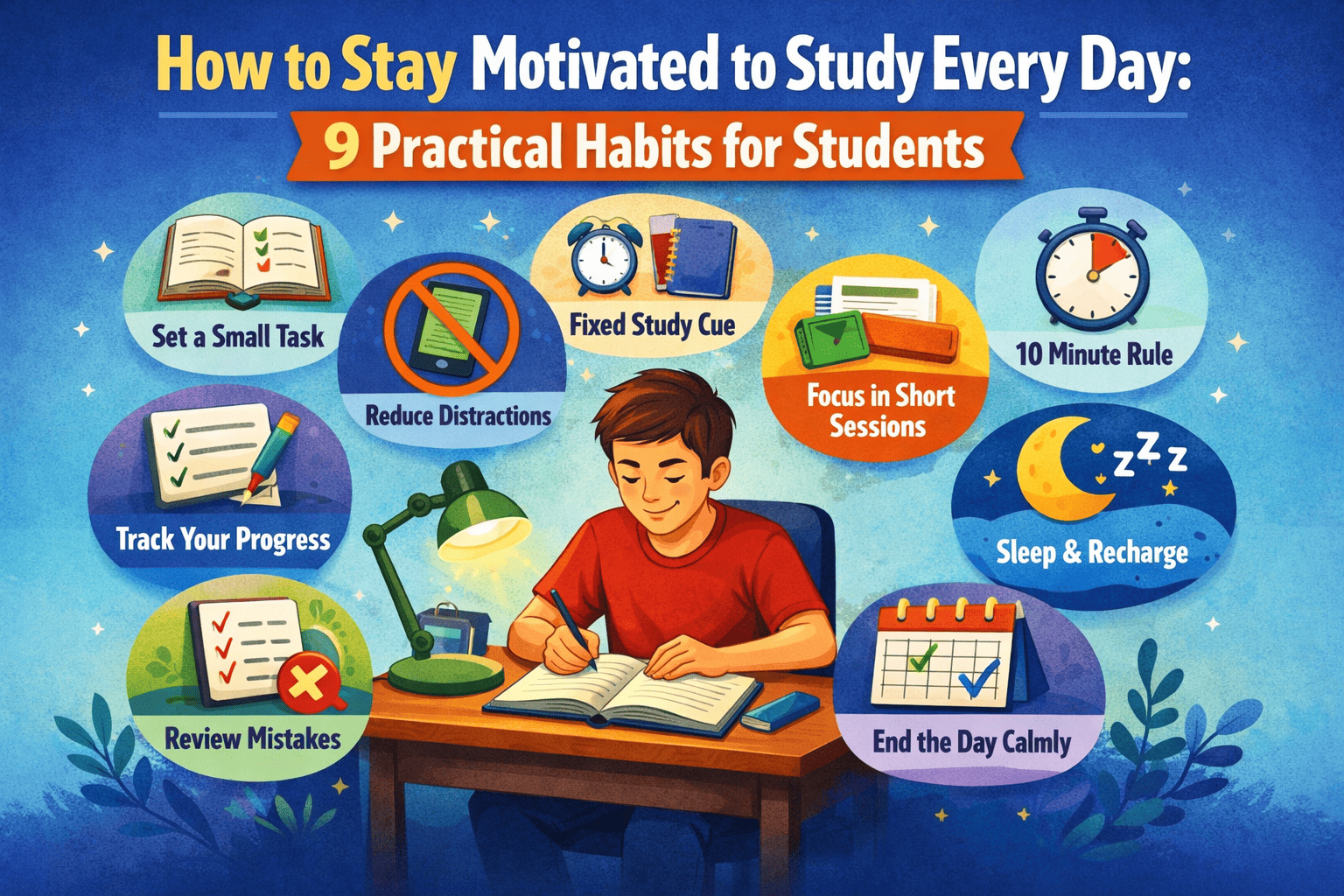
How to Stay Motivated to Study Every Day: 9 Practical Habits for Students
Motivational Stories
The Power of a Motivational Story: How One Man Transformed Failure Into Success
Motivational Stories
25 Life-Changing Success Stories in English That Will Ignite Your Dreams
Motivational Stories
Motivational Stories in Marathi: Inspiring Tales of Achievement That Will Transform Your Life
Motivational Stories
7 Life-Changing English Motivational Stories That Will Transform Your Mindset Forever
Motivational Stories
25 Short Hindi Motivational Stories That Changed Lives | प्रेरणादायक कहानियाँ जो जीवन बदल देती हैं
Motivational Stories
From Dropout to CEO: Steve Jobs Success Story That Changed Technology Forever
Entrepreneur Success Stories
Leave a comment