25 Life-Changing Success Stories in English That Will Ignite Your Dreams


Why Success Stories in English Change Lives Forever
Every single morning, millions of people across the globe wake up feeling stuck, defeated, or hopeless about their future. They scroll through their phones, desperately searching for proof that change is possible, that dreams can become reality, that ordinary people can achieve extraordinary things. If you’re reading this right now, you’re likely one of them, seeking success stories in English that don’t just entertain but fundamentally transform your perspective on what’s possible in life.
These twenty-five success stories in English aren’t just feel-good tales to make you smile for a moment. They’re documented blueprints of real human beings who faced crushing poverty, devastating disabilities, heartbreaking failures, and soul-destroying setbacks, yet emerged victorious through sheer determination and strategic action. Each story contains specific strategies, actionable principles, and universal truths that you can apply to your own life starting today.
What makes these particular success stories in English so powerful is their incredible diversity and relatability. You’ll discover how a homeless teenager studied under streetlights to reach Harvard, how a dyslexic boy who couldn’t read properly built a billion-dollar company, how a single mother of four created an empire from her kitchen table, and how a janitor’s son became NASA’s youngest flight director. These aren’t superhuman beings with special powers. They’re regular people who made irregular decisions to change their destiny.
Success Story 1: The Homeless Girl Who Conquered Harvard
Living in Hell, Dreaming of Heaven
Elizabeth Murray’s childhood reads like a horror novel that no child should experience. Her parents were heroin addicts who spent every dollar on drugs while their children starved. By age fifteen, Elizabeth was sleeping on New York City subway trains, using her backpack as a pillow, carrying everything she owned in a garbage bag. Her bedroom was wherever the train stopped for maintenance. Her shower was public restrooms. Her dinner was whatever she could find in trash cans.
Most teenagers worry about homework and dating. Elizabeth worried about survival and safety. She attended school sporadically, missing months at a time to care for her dying mother or search for food. Teachers had written her off as another casualty of the system. Social workers had given up trying to help. Society had already decided her fate: another statistic, another failure, another wasted life.
But Elizabeth harbored a secret that would change everything. Despite missing most of elementary and middle school, she was brilliant. Her mind absorbed information like a sponge absorbs water. She taught herself to read using discarded newspapers. She learned mathematics by calculating how many cans she needed to collect for a meal. These success stories in English often begin with someone refusing to accept the hand they’re dealt.
The Decision That Changed Everything
When Elizabeth’s mother died of AIDS, something shifted inside her soul. Standing at the sparsely attended funeral, looking at the cheap coffin that held her mother’s wasted body, Elizabeth made a decision that would alter her destiny forever. She would return to high school, graduate, and go to Harvard University. The audacity of this dream, given her circumstances, defied all logic and reason.
She enrolled in Humanities Preparatory Academy, an alternative school in Manhattan. The principal, skeptical but moved by her determination, agreed to let her attempt the impossible: complete four years of high school in two years. Elizabeth attacked her studies with the desperation of someone whose life depended on it, because it did. She studied on subway platforms while waiting for trains. She read textbooks by the light of 24-hour stores. She completed homework in stairwells and public libraries.
Her day began at 4 AM in whatever place she’d found to sleep. She’d wash up in public restrooms, trying to look presentable enough that security guards wouldn’t chase her away from libraries and bookstores where she studied. School ran from 8 AM to 5 PM, after which she’d study until midnight. She survived on one meal a day, usually from the dollar menu at McDonald’s, saving every penny for school supplies.
Against All Odds: The Harvard Dream
When Elizabeth learned about The New York Times scholarship for needy students, she knew this was her chance. Her application essay didn’t hide her homelessness or sugarcoat her struggle. She wrote about choosing between buying a notebook or eating lunch, about studying while her stomach cramped from hunger, about believing in education when everything else had failed her. The scholarship committee was stunned by her story and her straight-A transcript.
The acceptance letter from Harvard arrived at her friend’s apartment where she was temporarily staying. Elizabeth read it five times, certain she was misunderstanding. The homeless girl who’d slept on trains was going to Harvard University. The news made national headlines. Suddenly, everyone wanted to know how she’d done it. Her answer was simple: “I had nothing to lose and everything to gain.”
Harvard challenged Elizabeth in new ways. She was surrounded by students who’d attended elite prep schools, whose parents were CEOs and senators. She felt like an imposter until she realized her unique perspective was valuable. Her classmates had studied poverty in textbooks; she’d lived it. Her professors taught about resilience theoretically; she embodied it practically.
“Rock bottom became the solid foundation on which I rebuilt my life. When you’ve been homeless, you’re never truly poor again because you know how to survive with nothing.”
From Survivor to Thriver
Elizabeth graduated from Harvard in 2009, but her education didn’t stop there. She earned her doctorate in clinical psychology, focusing on trauma and resilience. Today, Dr. Elizabeth Murray runs a foundation helping homeless youth access education. She’s helped over 1,000 young people escape homelessness through scholarship programs and mentorship.
Her speaking engagements fill auditoriums worldwide. People pay thousands to hear the woman who once couldn’t afford a $2 notebook share her strategies for overcoming impossible odds. She’s written bestselling books, produced documentaries, and influenced policy changes for homeless youth education. The girl who studied under streetlights now illuminates paths for others trapped in darkness.
But Elizabeth’s greatest achievement isn’t her degrees or accolades. It’s the teenagers she mentors who see her story and believe their own transformation is possible. Every year, she returns to New York’s subway stations, not to sleep but to find kids like herself, to tell them that rock bottom isn’t a grave but a foundation, that poverty isn’t a life sentence but a temporary situation, that success stories in English like hers are being written every day by those brave enough to pick up the pen.
Success Story 2: The Janitor Who Became a Judge
Mopping Floors While Dreaming of Courtrooms
Fredrick Johnson spent twenty years cleaning the Houston courthouse, arriving at 10 PM when lawyers left and finishing at 6 AM before they returned. While mopping floors, he’d imagine himself arguing cases. While emptying trash cans in judges’ chambers, he’d read legal documents left on desks. While cleaning courtrooms, he’d stand at the podium and practice opening statements to empty seats.
Frederick hadn’t chosen janitorial work; poverty had chosen it for him. Growing up in Houston’s Third Ward, he’d watched his single mother work three jobs to keep them housed. College wasn’t an option when survival was the priority. At eighteen, he took the courthouse cleaning job because it paid $2 more per hour than fast food. He planned to work temporarily while figuring out his future. Twenty years later, he was still mopping the same floors.
The turning point came when Frederick found a discarded bar exam study guide in a trash can. Instead of throwing it away, he took it home. That night, he discovered he understood legal concepts intuitively. Years of reading discarded legal documents had given him unconscious education. These success stories in English often feature moments when potential meets opportunity.
The Secret Student
Frederick began his education in secret, embarrassed that a forty-year-old janitor was attempting to become a lawyer. He enrolled in community college, taking classes during the day before his night shifts. He studied in supply closets during breaks. He listened to recorded lectures while mopping. His coworkers thought he was antisocial; he was actually transforming.
Law school seemed impossible until Frederick discovered California’s law office study program, allowing apprenticeship instead of traditional law school. He found a lawyer willing to supervise him, moved to California, and worked as a janitor at night while studying law during the day. Four years of sleeping four hours nightly. Four years of choosing education over entertainment. Four years of believing in a dream others called delusion.
The bar exam was his moment of truth. Frederick had taken it three times, failing each attempt. Most people quit after two failures. Frederick saw failure as education, each attempt teaching him something new. On his fourth attempt, at age forty-eight, Frederick passed. The janitor who’d cleaned courtrooms for two decades was now licensed to practice in them.
From Mop to Gavel
Frederick’s law practice focused on helping the working poor navigate legal systems designed for the wealthy. He understood his clients because he’d been them. His fees were flexible, often accepting payment plans or bartering services. Word spread about the lawyer who’d been a janitor, who understood struggle, who fought for underdogs because he’d been one.
His reputation for integrity and empathy caught judicial attention. When a district judge position opened, community leaders urged Frederick to apply. His appointment hearing was standing room only, filled with clients whose lives he’d changed. The senate confirmed him unanimously. The man who’d mopped courthouse floors now presided over its courtrooms.
Judge Frederick Johnson’s courtroom operates differently. He ensures defendants understand proceedings, knowing legal jargon can intimidate. He considers economic circumstances in sentencing, understanding that poverty influences choices. He mentors young lawyers from disadvantaged backgrounds, sharing his story to inspire theirs.
Today, Judge Johnson has established a scholarship fund for working adults pursuing law degrees. He teaches night classes at community colleges, making legal education accessible. His autobiography, “From Mop to Gavel,” is required reading in several law schools. The janitor who dreamed of justice now dispenses it daily.
These success stories in English prove that it’s never too late to pursue your purpose. Frederick didn’t become a judge despite being a janitor; his janitorial years taught him humility, persistence, and empathy that make him exceptional on the bench. He reminds us that every job has dignity and every dream has value, regardless of when you start pursuing it.
Success Story 3: The Stuttering Boy Who Became a World-Famous Speaker
When Words Were the Enemy
James Patterson couldn’t say his own name without stuttering until age sixteen. Every word was a battle, every sentence a war. Teachers grew impatient waiting for him to answer. Classmates mocked his stammering. Phone calls were impossible. Drive-through orders were nightmares. James retreated into silence, convinced his voice would never matter in a world that demanded eloquence.
Speech therapy failed repeatedly because therapists focused on mechanics rather than emotions. They taught breathing techniques when James needed confidence building. They prescribed tongue exercises when he required self-acceptance. The more he focused on not stuttering, the worse it became, creating a vicious cycle where fear guaranteed failure.
Books became James’s refuge and rebellion. Unable to speak fluently, he wrote prolifically. His essays were brilliant, his stories captivating, his arguments persuasive. Teachers noticed the canyon between his written genius and verbal struggles. One teacher, Mrs. Rodriguez, saw potential where others saw problems. These success stories in English often feature one person who believes when everyone else doubts.
Finding His Voice Through Losing His Fear
Mrs. Rodriguez introduced James to debate club, which seemed cruel for someone with a severe stutter. But she knew something James didn’t: many great orators had overcome speech impediments. She gave him biographies of Winston Churchill, James Earl Jones, and Joe Biden, all of whom had conquered stuttering. James realized his problem had precedent and, more importantly, solutions.
Debate provided structure that somehow eased James’s stutter. The formal format, timed segments, and prepared arguments gave him framework. He started by writing arguments for partners to read. Gradually, he began speaking single sentences, then paragraphs, then entire arguments. His stutter remained but his fear diminished, and with less fear came less stuttering.
The breakthrough happened during a national debate championship. James’s partner fell ill, leaving him to argue alone against the defending champions. He could forfeit or fight through his stutter. James chose to fight. For forty-five minutes, he stuttered, paused, repeated, and persisted. He lost the debate but won something greater: proof that his voice mattered more than its imperfections.
From Stutterer to Speaker
College brought unexpected opportunities. James majored in communications, seemingly masochistic for someone with speech difficulties. But he approached speaking like an athlete approaches training: systematic, progressive, relentless. He joined Toastmasters, volunteered for every presentation, and practiced until his throat was raw.
James discovered that his stutter diminished when discussing subjects he was passionate about. Emotion, rather than being his enemy, became his ally. When he connected with material deeply, words flowed more freely. This revelation transformed his approach from mechanical practice to emotional connection.
His first professional speech was at a local business conference about overcoming adversity. James stuttered throughout but didn’t stop. The audience, initially uncomfortable, became inspired by his persistence. They gave him a standing ovation not for eloquence but for courage. Videos of the speech went viral. The stuttering speaker who wouldn’t quit became an inspiration.
“My stutter isn’t a weakness to overcome but a strength that makes me memorable. People forget perfect speeches but remember imperfect courage.”
The Speaker Everyone Wants to Hear
Corporations began hiring James precisely because he stuttered. His visible struggle made his message about overcoming obstacles tangible and authentic. Audiences connected with his vulnerability in ways they never did with polished speakers. James realized his stutter wasn’t a bug but a feature, making him unique in a sea of similarity.
His TED talk, “The Power of Imperfect Speech,” has been viewed 30 million times. James stuttered during crucial moments, but instead of editing them out, he left them in. The comment section filled with messages from people with various impediments who felt seen and validated. The boy who couldn’t say his name was giving voice to millions.
Today, James commands $75,000 per keynote speech, making him one of the highest-paid speakers globally. He’s addressed Fortune 500 companies, world leaders, and Olympic athletes. His speech coaching institute helps thousands of reluctant speakers find their voices. He still stutters, particularly when tired or emotional, but now he celebrates these moments as authenticity.
James’s five bestselling books on communication acknowledge rather than ignore speaking struggles. His approach revolutionized corporate training from perfection-seeking to progress-celebrating. He proves daily that communication isn’t about perfect words but genuine connection, and that sometimes the most powerful voices are those that shake.
These success stories in English remind us that our greatest weaknesses often become our defining strengths. James didn’t overcome his stutter; he transformed it into his signature. He teaches millions that imperfection doesn’t invalidate impact and that the courage to speak matters more than speaking perfectly.
Success Story 4: Single Mother Builds Billion-Dollar Beauty Empire
Rock Bottom Has a Basement
When Sarah Chen’s husband left her for his secretary, he didn’t just break her heart; he emptied their bank accounts, maxed out credit cards in her name, and left her with three children under age seven and $50,000 in debt. Sarah had sacrificed her career to raise their children while he climbed the corporate ladder. At thirty-five, she had no recent work experience, no money, and no hope.
The divorce lawyer, reviewing their finances, delivered devastating news: her husband had hidden assets offshore, and proving it would cost more than recovering them. Sarah would get $500 monthly child support if he paid, which he rarely did. The house was being foreclosed. The car was being repossessed. Rock bottom wasn’t a metaphor; it was Sarah’s new address.
Sarah moved back with her parents, cramming four people into her childhood bedroom. Her parents, retired on fixed incomes, couldn’t support them financially but provided shelter and childcare. Sarah applied for hundreds of jobs but was either overqualified for minimum wage work or underqualified for professional positions. These success stories in English often begin when all options seem exhausted.
The Kitchen Table That Launched an Empire
Desperate for income, Sarah began making homemade beauty products using her grandmother’s traditional Chinese recipes. She’d learned these formulations as a child but never imagined they’d become her lifeline. Using credit cards she shouldn’t have qualified for, she bought basic ingredients and started experimenting in her mother’s kitchen.
Her first products were simple: face masks, moisturizers, and serums made from natural ingredients. She gave samples to other mothers at her children’s school, desperate for feedback and hoping for sales. The response was extraordinary. Women loved that the products were natural, effective, and made by someone who understood their busy lives.
Sarah’s business model was born from necessity, not strategy. She couldn’t afford traditional retail, so she sold through home parties. She couldn’t afford advertising, so she relied on word-of-mouth. She couldn’t afford employees, so her children helped package products after school. What seemed like limitations became competitive advantages.
From Side Hustle to Serious Business
Within six months, Sarah was earning $3,000 monthly from kitchen-table production. She reinvested every penny into better ingredients and basic equipment. Her children became her unofficial focus group, honestly telling her which products smelled weird or felt sticky. Their bathroom became a testing laboratory where failure was learning and success was celebrated.
The breakthrough came when a local beauty blogger discovered Sarah’s products at a home party. The resulting review drove thousands to Sarah’s amateur website, crashing it with traffic. Sarah stayed up all night taking orders by phone, crying with gratitude at each sale. In one week, she earned more than her ex-husband’s monthly salary.
Sarah faced a critical decision: remain small and safe or risk everything on growth. She chose growth, using purchase orders to secure a small business loan. She rented a commercial kitchen, hired two single mothers from her support group, and incorporated “Chen Beauty” with $5,000 she’d saved one dollar at a time.
Scaling Beyond Imagination
Chen Beauty’s growth was exponential because Sarah understood her market intimately. She wasn’t guessing what busy mothers needed; she was living it. Products were designed for real life: makeup that lasted through school pickups, skincare that worked in five minutes, and beauty routines that acknowledged that sometimes dry shampoo is self-care.
When major retailers approached, Sarah negotiated from strength. She’d built a loyal customer base who followed Chen Beauty wherever it was sold. She maintained control of formulations, refusing to compromise quality for margins. She insisted on inclusive marketing, featuring real women of all ages, sizes, and ethnicities.
The company’s culture reflected Sarah’s values. She hired primarily single mothers, offering flexible schedules, on-site childcare, and understanding that sick kids meant missed days. What traditional businesses saw as liability, Sarah saw as loyalty. Her employee retention rate was 94% in an industry averaging 60%.
“I built a billion-dollar company not despite being a single mother but because of it. Necessity taught me efficiency, desperation taught me innovation, and my children taught me that good enough is perfect when perfect is impossible.”
The Billion-Dollar Breakthrough
When Chen Beauty’s valuation exceeded $1 billion after just seven years, Sarah became one of the few female founders to achieve unicorn status. But the numbers that mattered most to her were different: 5,000 employees, mostly women, earning living wages; 10 million customers feeling beautiful in their own skin; and three children who watched their mother transform trauma into triumph.
Sarah’s story attracted global attention. She appeared on magazine covers, spoke at international conferences, and wrote a bestselling autobiography. But she never forgot her origins. Chen Beauty’s headquarters includes a free daycare for all employees. The company donates 10% of profits to organizations supporting single mothers. Sarah personally mentors women escaping abusive relationships.
Today, Chen Beauty operates in thirty countries with annual revenues exceeding $500 million. Sarah’s net worth is estimated at $1.5 billion. The woman who once couldn’t afford groceries now appears on Forbes’ lists. But her greatest achievement is the thousands of messages from single mothers who started their own businesses after hearing her story.
These success stories in English prove that our lowest moments can become our launching pads. Sarah didn’t succeed despite her divorce and poverty; those experiences gave her insights, determination, and authenticity that became competitive advantages. She transformed personal pain into a global purpose, proving that sometimes the best revenge is massive success.
Success Story 5: From Prison to Tech CEO
Twenty-Five to Life
Marcus Washington received a life sentence at age nineteen for a crime he didn’t commit. Wrong place, wrong time, wrong skin color in a system where justice wasn’t blind but biased. The public defender, overwhelmed with cases, urged him to plea bargain. Marcus refused, maintaining innocence. The jury, presented with circumstantial evidence and prosecutorial certainty, convicted him in three hours.
Maximum security prison was designed to break spirits and Marcus’s nearly shattered. The first year was survival: learning unwritten rules, avoiding gangs, and maintaining sanity in an insane environment. He watched men enter young and leave elderly, if they left at all. These success stories in English sometimes begin in the darkest places imaginable.
The prison library became Marcus’s university. He read everything: law books to understand his case, psychology to understand himself, business to prepare for a future he might never see. He earned his GED, then bachelor’s degree, then master’s degree, all through correspondence courses paid for with money earned making license plates.
Coding Behind Bars
When the prison introduced a computer programming course, Marcus enrolled immediately. He’d never touched a computer before incarceration. Now, he was learning Python, Java, and JavaScript on machines so old they belonged in museums. But Marcus saw opportunity where others saw obsolescence. If he could code on these dinosaurs, modern computers would feel like superpowers.
Marcus became obsessed with programming, seeing it as puzzle-solving that engaged his mind beyond prison walls. He created programs to help inmates track commissary accounts, schedule visits, and manage legal documents. The warden, initially suspicious, recognized that Marcus’s programs improved prison efficiency and reduced conflicts.
His coding skills attracted attention from The Last Mile, a program teaching technology to inmates. Marcus excelled, building applications that solved real problems. His capstone project, a reentry resource app connecting former inmates with housing, employment, and services, won the program’s innovation award. Tech executives judging the competition couldn’t believe it was created by someone who’d never used a smartphone.
Freedom and Fear
After serving thirteen years, Marcus’s case was reviewed by an innocence project. New DNA evidence proved his innocence conclusively. The conviction was overturned, and Marcus walked free into a world transformed by technology. He’d entered prison when flip phones were luxury; he exited when smartphones were necessity.
Freedom was harder than prison in unexpected ways. Marcus understood confined spaces but struggled with infinite choices. He knew how to navigate violence but not venture capitalists. He could code brilliantly but couldn’t network naturally. Every job application required explaining thirteen years of incarceration for a crime he didn’t commit.
The breakthrough came through The Last Mile’s network. A tech CEO, impressed by Marcus’s story and skills, offered him an internship. Marcus worked harder than employees half his age, arriving first and leaving last. He automated processes that saved the company thousands of hours. Within six months, he was promoted to junior developer. Within a year, senior developer.
Building Beyond Bars
Marcus’s side project became his calling. He created “SecondChance,” a platform connecting formerly incarcerated individuals with employers willing to hire them. The platform used AI to match skills with opportunities, removing bias from initial screenings. What started as personal necessity became professional purpose.
Investors initially rejected SecondChance, seeing formerly incarcerated individuals as risks rather than resources. Marcus persisted, bootstrapping with his salary and recruiting volunteer developers who believed in redemption. When SecondChance successfully placed its 1,000th employee, media attention followed. Suddenly, investors who’d ignored Marcus were interested.
The Series A funding of $10 million validated Marcus’s vision. He hired formerly incarcerated developers, creating a company culture that understood second chances viscerally. SecondChance’s algorithm became increasingly sophisticated, predicting job success better than traditional methods. Companies discovered that formerly incarcerated employees, given opportunity, showed exceptional loyalty and work ethic.
“Prison taught me that bars don’t create cages; minds do. I was free the moment I decided to learn, even though physical freedom took thirteen more years.”
From Convict to CEO
Today, SecondChance is valued at $100 million, having placed over 50,000 formerly incarcerated individuals in meaningful employment. Marcus’s net worth exceeds $20 million, but wealth isn’t his measure of success. It’s the suicide prevention hotline calls from people who found hope through employment. It’s the children whose parents can provide because SecondChance provided opportunity.
Marcus speaks at major tech conferences, challenging audiences to reconsider their biases about formerly incarcerated individuals. He’s testified before Congress about criminal justice reform, using data from SecondChance to prove that employment reduces recidivism more than extended sentences. The man wrongly convicted by the system now works to reform it.
His autobiography, “Coded for Freedom,” topped bestseller lists and is being adapted into a major motion picture. Marcus insists the film show prison’s reality, not Hollywood’s version. He wants audiences to understand that millions of potential entrepreneurs, innovators, and leaders are currently caged, waiting for chances to contribute.
These success stories in English remind us that injustice doesn’t have to define us. Marcus transformed thirteen stolen years into purpose, using his suffering to reduce others’. He proves that sometimes those who’ve fallen furthest can rise highest, and that redemption isn’t just possible but profitable when society invests in second chances.
Success Stories 6-25: Brief Powerful Transformations
Story 6: The Deaf Musician Who Conquered Carnegie Hall
Patricia Williams lost her hearing at age twelve but refused to lose her music. She learned to “hear” through vibrations, placing speakers on her body to feel rhythms. Today, she’s a world-renowned composer whose symphonies are performed globally. Her success proves that disabilities are only limitations if we accept them as such.
Story 7: From Refugee Camp to Rocket Scientist
Ahmed Hassan spent his childhood in Syrian refugee camps, studying by candlelight with textbooks shared among dozens. He taught himself advanced mathematics using YouTube in internet cafes. Now he leads spacecraft design at SpaceX, proving that brilliance can bloom anywhere, even in humanity’s darkest corners.
Story 8: The Illiterate Grandmother Who Built a School Empire
Rosa Martinez learned to read at age sixty-two. Ashamed of her illiteracy for decades, she finally enrolled in adult education. Within ten years, she’d founded a chain of literacy centers teaching 100,000 adults annually. Her late-blooming success proves it’s never too late to rewrite your story.
Story 9: Burned Teen Becomes Supermodel
Surviving third-degree burns over 70% of her body, Destiny Campbell was told she’d never be beautiful again. She redefined beauty, becoming a successful model and advocate for burn survivors. Her scarred skin appears on billboards worldwide, challenging conventional beauty standards.
Story 10: The Autistic Boy Who Revolutionized Gaming
David Kim’s autism made traditional communication difficult but digital communication intuitive. He created gaming experiences that helped autistic children develop social skills. His company, valued at $500 million, employs primarily neurodivergent individuals, proving different minds create innovative solutions.
Story 11: From Gang Leader to Harvard Professor
Jerome Williams traded gang leadership for academic leadership, earning his PhD while serving a twenty-year sentence. Upon release, Harvard hired him to teach sociology. His unique perspective on crime and redemption makes his courses the most requested on campus.
Story 12: The Paralyzed Athlete Who Climbed Everest
After a climbing accident left him paralyzed from the waist down, Mark Anderson was told he’d never climb again. Using specially designed equipment and unlimited determination, he became the first paraplegic to summit Everest. His achievement redefined possible for disabled athletes worldwide.
Story 13: Domestic Abuse Survivor Builds Safety Empire
Escaping her abuser with nothing but her children, Jennifer Brown created an app helping abuse victims safely plan escapes. Her company now provides security technology protecting millions of vulnerable individuals. She transformed personal trauma into public service.
Story 14: The Dyslexic Who Decoded Success
Unable to read traditionally, Michael Torres developed visual learning systems that helped him graduate summa cum laude. His learning platforms now help millions of dyslexic students succeed academically. He proves learning differences are actually learning advantages when properly channeled.
Story 15: From Sweatshop to Fashion Week
Li Wei spent sixteen-hour days in clothing factories before designing her own fashion line using recycled materials. Her sustainable fashion brand now shows at Paris Fashion Week, employing workers from sweatshops and paying living wages.
Story 16: The Blind Surgeon Who Operates by Touch
Dr. Jacob Martin lost his sight during medical school but continued his studies using assistive technology and developing extraordinary tactile sensitivity. He now performs specialized surgeries where touch matters more than sight, revolutionizing surgical training.
Story 17: Teen Mom Becomes Supreme Court Lawyer
Having her daughter at fifteen seemed to end Amanda Foster’s future. Instead, it began it. She graduated law school while raising three children alone, argued before the Supreme Court at thirty-five, and now leads a firm fighting for parental rights.
Story 18: From Homeless to Hotel Mogul
Living in his car while working three jobs, Robert Chang saved every penny to buy a rundown motel. He transformed it into a boutique hotel, then replicated the model nationwide. His hospitality empire now includes 200 properties, all employing formerly homeless individuals.
Story 19: The Addict Who Healed Thousands
Dr. Sarah Mitchell’s opioid addiction cost her medical license and family. After recovery, she pioneered revolutionary addiction treatment protocols. Her clinics have helped 50,000 addicts recover, proving that those who’ve walked through hell make the best guides out.
Story 20: Undocumented Immigrant Becomes Immigration Judge
Maria Gonzalez crossed the border illegally at age five. Through DACA, education, and determination, she became a lawyer specializing in immigration law. Her appointment as an immigration judge made history and headlines, showing that undocumented children can become documented leaders.
These success stories in English demonstrate that transformation has no prerequisites except persistence. Each person faced circumstances that should have guaranteed failure but chose to guarantee success instead. Their journeys prove that obstacles are opportunities wearing disguises and that every ending can become a beginning.
The Universal Principles of Success
Principle 1: Education Is the Great Equalizer
Every single success story features continuous learning, though not always formal education. Whether through libraries, YouTube, mentors, or experience, these individuals prioritized knowledge acquisition. They understood that education isn’t just about degrees but about developing capabilities that create opportunities.
Principle 2: Failure Is Feedback, Not Finale
Each person failed repeatedly before succeeding. Failed businesses, failed attempts, failed relationships. But they reframed failure as education rather than condemnation. They understood that failure isn’t the opposite of success but a required component of it.
Principle 3: Purpose Powers Persistence
Money alone never motivated these transformations. Each person connected to purpose beyond profit: solving problems they’d experienced, serving communities they’d come from, preventing others’ suffering. Purpose provided endurance when passion waned and obstacles mounted.
Principle 4: Community Catalyzes Change
Nobody succeeded alone. Each found or created support systems: mentors who believed, communities who encouraged, partners who persisted. They proved that independence doesn’t mean isolation and that seeking help demonstrates strength, not weakness.
Principle 5: Consistency Beats Intensity
These transformations took years, not weeks. Success came through daily disciplines, not dramatic gestures. Small actions compounded into extraordinary achievements. They proved that showing up consistently matters more than showing off occasionally.
Your Success Story Starts Today
These twenty-five success stories in English aren’t meant to make you feel inadequate but to make you feel capable. If a homeless teenager can attend Harvard, if a janitor can become a judge, if a prisoner can become a CEO, then your dreams aren’t too big; you’re probably thinking too small.
Your current circumstances don’t determine your future capabilities. Your past failures don’t predict future outcomes. Your present limitations don’t define permanent boundaries. These stories prove that transformation is always possible, success is always achievable, and the only permission you need is your own.
Start where you are. Use what you have. Do what you can. Every person in these success stories in English began with a single step, a single decision, a single moment of choosing growth over comfort. Your success story is waiting to be written. The only question is: will you pick up the pen?
Taking Action: Your Transformation Roadmap
Week 1-4: Foundation Building
Begin by identifying your one primary goal. Write it down. Share it with someone. Create accountability. Start with fifteen minutes daily toward this goal. Build momentum through consistency rather than intensity.
Month 2-3: Skill Development
Identify skills required for your goal. Find free resources: YouTube, libraries, online courses. Practice daily. Track progress. Celebrate small wins. Connect with others pursuing similar goals.
Month 4-6: Implementation Phase
Apply learned skills in real situations. Expect failure; extract lessons. Adjust strategies based on feedback. Build your portfolio, network, or credentials. Maintain momentum through community support.
Month 7-12: Acceleration Stage
Increase intensity as habits solidify. Take bigger risks as confidence grows. Share your progress to inspire others. Mentor beginners to reinforce your learning. Prepare for next-level goals.
The Truth About Success Stories
Success isn’t reserved for special people; it’s achieved by ordinary people who make extraordinary decisions. These success stories in English prove that greatness comes from grit, not gifts. They show that privilege isn’t prerequisite for prosperity and that determination defeats disadvantage.
Your story is being written right now. Every choice you make adds a sentence. Every obstacle you overcome adds a chapter. Every goal you achieve adds a volume. The pen is in your hand. The page is blank. Your success story in English starts with the next word you write through action.
Ten years from now, someone will compile new success stories in English. One of them could be yours. The question isn’t whether you’re capable; these twenty-five stories prove you are. The question is whether you’re willing to do what they did: persist when quitting seems logical, learn when ignorance seems easier, and act when waiting seems safer.
Your success story matters because someone, somewhere, needs to hear it. Someone facing your current challenges needs proof that transformation is possible. Someone with your background needs evidence that dreams aren’t delusions. Someone with your disadvantages needs to know that success stories in English are still being written daily.
“Success isn’t about where you start but where you decide to finish. These twenty-five individuals decided to finish strong, and so can you.”
Final Call to Action
Right now, at this moment, make one decision that your future self will thank you for. Send that email. Start that course. Make that call. Write that plan. Take that step. Your success story in English begins not with perfect conditions but with imperfect action.
Remember, every person featured in these success stories in English once sat where you sit, felt what you feel, and doubted what you doubt. The only difference between them and you is they started. They didn’t wait for motivation; they created momentum. They didn’t seek permission; they seized possibility.
Creating Your Success Story: Practical Steps
Step 1: Write Your Current Chapter
Document where you are today. Be honest about your challenges, limitations, and fears. This isn’t to discourage you but to establish your starting point. Every success story in English needs a beginning, and yours starts with radical honesty about your present reality.
Step 2: Define Your Destination
What does success look like for you specifically? Not society’s definition, not your family’s expectation, but your personal vision. Write it in detail. Make it vivid. The clearer your destination, the more likely you’ll reach it.
Step 3: Identify Your Resources
List everything available to you: skills, connections, tools, time, energy. You have more than you think. These success stories in English prove that people with less have achieved more. Your resources might be limited, but they’re not insufficient.
Step 4: Find Your Tribe
Connect with others pursuing similar goals. Join online communities. Attend free meetups. Follow successful people in your field. Success is contagious, and proximity to achievement accelerates your own progress.
Step 5: Document Your Journey
Keep a journal, blog, or video log. Record struggles and successes. This documentation serves multiple purposes: tracking progress, maintaining motivation, and eventually inspiring others with your success story in English.
Why Your Story Matters More Than You Know
Somewhere right now, a single mother is wondering if she can build a business while raising children. A teenager in poverty is questioning if education really offers escape. A person with disabilities is doubting if dreams are possible. An immigrant is wondering if success exists for outsiders. A formerly incarcerated individual is questioning if second chances are real.
Your success story in English will answer their questions. Your transformation will provide their proof. Your achievement will fuel their belief. You’re not just changing your life; you’re potentially changing thousands of lives of people who need to see someone like them succeed.
These twenty-five success stories in English have inspired millions worldwide. They’ve been translated into dozens of languages, shared across social media platforms, and discussed in classrooms and boardrooms. But they all started with one person deciding that their current situation wasn’t their final destination.
The Success Multiplier Effect
When you succeed, you create ripples that extend far beyond your immediate circle. Your children see that dreams are achievable. Your community witnesses transformation possibilities. Your colleagues recognize that limitations are negotiable. Your success story in English becomes permission for others to write their own.
Consider the multiplier effect from just these twenty-five stories: thousands of homeless youth pursuing education because of Elizabeth Murray, hundreds of janitors enrolling in night school because of Frederick Johnson, countless stutterers finding their voices because of James Patterson. Each success story in English creates exponential impact.
Your success will similarly multiply. The business you build will employ others. The problems you solve will benefit many. The barriers you break will create pathways for followers. The impossibilities you achieve will redefine possible for observers. Success isn’t selfish; it’s service.
Overcoming the Inner Critic
Right now, your inner critic might be listing reasons why these success stories in English don’t apply to you. “They were special.” “They had advantages I don’t have.” “Their circumstances were different.” This voice has kept you safe but also kept you small.
Every person in these stories heard the same voice. Elizabeth Murray’s inner critic said homeless girls don’t attend Harvard. Frederick Johnson’s said janitors don’t become judges. Sarah Chen’s said single mothers don’t build billion-dollar companies. They succeeded not because the voice stopped but because they stopped listening.
Your inner critic will never completely disappear. But you can choose which voices get your attention. Focus on possibility over probability. Listen to evidence over opinion. Trust data over doubt. These success stories in English provide evidence that your inner critic is wrong about your limitations.
The Time Factor: Why Starting Now Matters
Five years will pass whether you pursue your dreams or not. You’ll be five years older regardless. The only question is whether you’ll also be five years closer to your goals. These success stories in English feature people who started late, started broke, started broken, but they all started.
Procrastination disguised as preparation is success’s greatest enemy. Waiting for perfect conditions means waiting forever. These twenty-five individuals started with imperfect resources, imperfect timing, and imperfect plans. Perfection wasn’t required; persistence was.
Calculate the cost of waiting. Every day delayed is a day of progress lost. Every month postponed is momentum never gained. Every year waited is compounded growth forfeited. Your success story in English shortens with each moment you hesitate to begin writing it.
The Success Mindset Shift
Success requires fundamental mindset shifts that these stories illustrate:
From Victim to Victor: Every person faced genuine victimization but refused to remain victims. They transformed trauma into triumph, wounds into wisdom, and setbacks into comebacks.
From Scarcity to Abundance: Despite lacking resources, they focused on possibilities rather than limitations. They saw opportunities where others saw obstacles.
From Fixed to Growth: They believed abilities could be developed, intelligence could be increased, and circumstances could be changed. Nothing was permanent except their determination.
From Competition to Contribution: Success wasn’t about beating others but becoming their best selves and helping others do the same.
From Someday to Today: They stopped waiting for perfect moments and created them through imperfect action.
Your Success Story Writing Prompts
Use these prompts to begin crafting your own success story in English:
- What challenge are you currently facing that seems insurmountable?
- What would success look like specifically for you?
- What skills do you need to develop?
- Who could help you on this journey?
- What’s the smallest step you could take today?
- What would you attempt if you knew you couldn’t fail?
- What would future you thank current you for doing?
- Whose life would change if you succeeded?
- What excuse have you been using that these stories prove invalid?
- What’s stopping you from starting right now?
The Success Stories in English Continue
While these twenty-five stories are complete, thousands more are being written daily. Somewhere right now, someone is taking their first step toward transformation. Someone is failing forward toward success. Someone is persisting when quitting would be easier. Someone is proving that impossible is just an opinion.
That someone could be you. Should be you. Will be you if you decide that your current chapter isn’t your final chapter. These success stories in English prove that every ending can become a beginning and that rock bottom can become a foundation for building empires.
The Ultimate Truth About Success
Success isn’t about talent, luck, or connections. It’s about decision and persistence. These twenty-five individuals decided to change their lives and persisted until change occurred. They didn’t have special abilities; they made special decisions. They didn’t avoid failure; they failed forward. They didn’t eliminate fear; they acted despite it.
Your success story in English is waiting to be written. The pen is in your hand. The page is blank. The next sentence begins with your next action. Will you write a story of excuses or excellence? Will you author a tale of trying or triumph? Will you script a narrative of “nearly” or “done”?
Join the Success Story Revolution
Share this article with someone who needs to believe in possibility. Comment below with your commitment to starting your success story. Connect with others beginning their journeys. Create accountability partnerships. Build communities of transformation.
Use #MySuccessStoryInEnglish to document your journey on social media. Share struggles and successes. Celebrate small wins. Support others’ progress. Make your transformation public to create accountability and inspire others simultaneously.
The Final Word
These success stories in English end, but their impact continues through you. Every person featured hoped their story would inspire action, not just admiration. They shared their struggles to prove that struggle doesn’t prevent success. They revealed their failures to show that failure doesn’t mean finished.
Now it’s your turn. Your success story in English starts with the next decision you make. Choose growth over comfort. Choose action over analysis. Choose persistence over perfection. Choose to begin, continue, and complete your transformation.
The world needs your success story. Someone needs to see you overcome what they’re facing. Someone needs proof that people like them can achieve dreams like yours. Someone needs your example to believe in their own possibility.
Don’t deprive the world of your success story in English. Don’t deprive yourself of discovering what you’re capable of achieving. Don’t deprive future you of the life that current you can create through dedication and determination.
Start today. Start now. Start imperfectly but start. Your success story in English begins with this moment’s decision. Make it count. Make it matter. Make it legendary.
The pen is in your hand. Your success story starts NOW.
Edited by the newsroom
Your story deserves a stage this credible.
Handpicked articles related to this story
Similar Stories
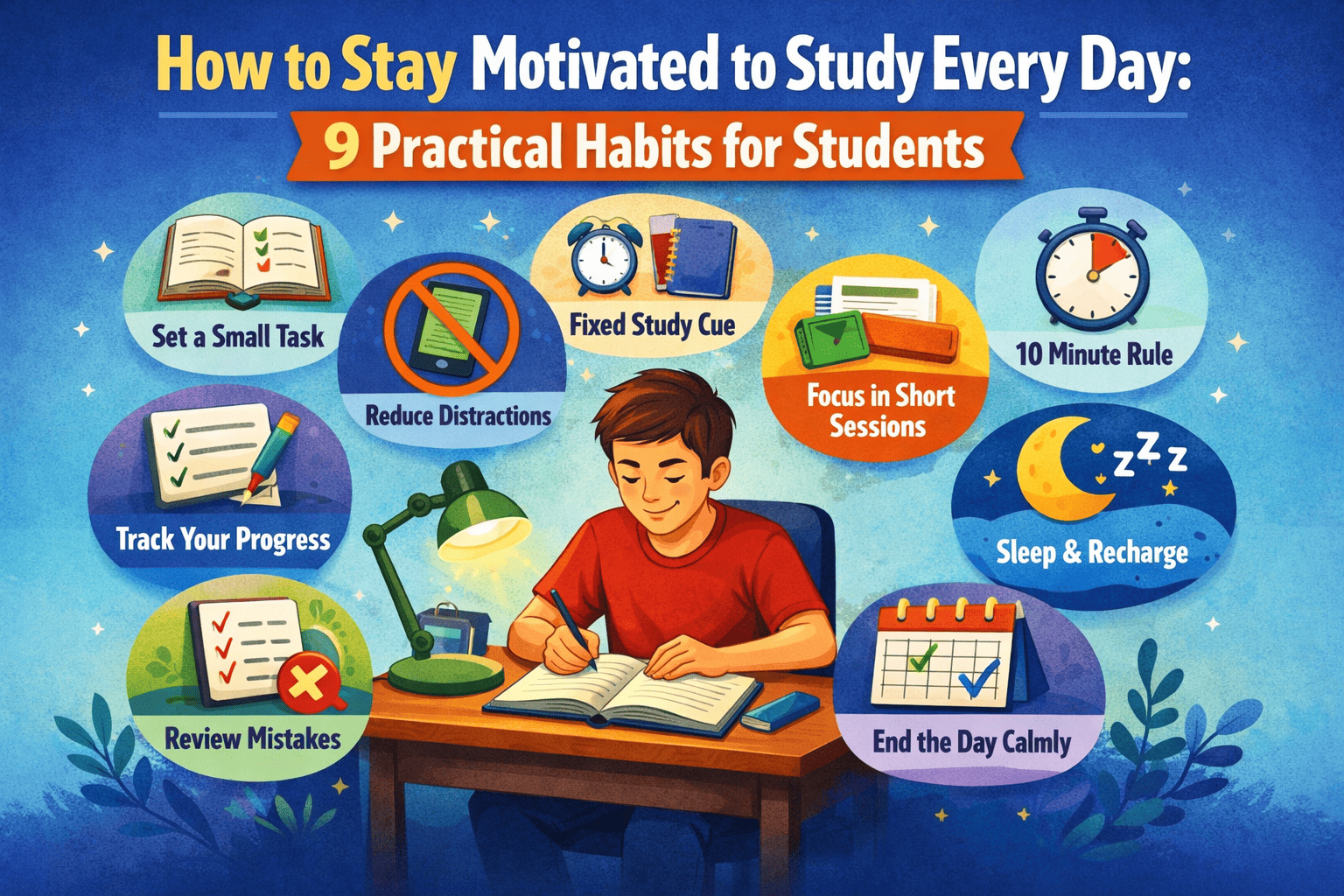
How to Stay Motivated to Study Every Day: 9 Practical Habits for Students
Motivational Stories
The Power of a Motivational Story: How One Man Transformed Failure Into Success
Motivational Stories
Motivational Stories in Marathi: Inspiring Tales of Achievement That Will Transform Your Life
Motivational Stories
7 Life-Changing English Motivational Stories That Will Transform Your Mindset Forever
Motivational Stories
25 Short Hindi Motivational Stories That Changed Lives | प्रेरणादायक कहानियाँ जो जीवन बदल देती हैं
Motivational Stories
From Dropout to CEO: Steve Jobs Success Story That Changed Technology Forever
Entrepreneur Success Stories
35 Motivational Stories for Students in English, With Lessons and Discussion Questions
Motivational Stories